The Cookware Material Guide That Actually Explains the Tradeoffs (Not Just the Fear)
Cookware material advice online tends to swing between blanket fear and blanket reassurance. A more useful approach compares the actual tradeoffs of each common material honestly, without treating every material as equally risky or equally fine.

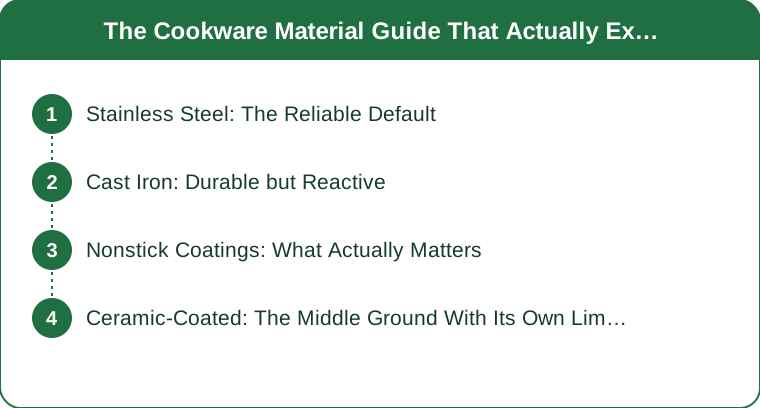
Stainless Steel: The Reliable Default
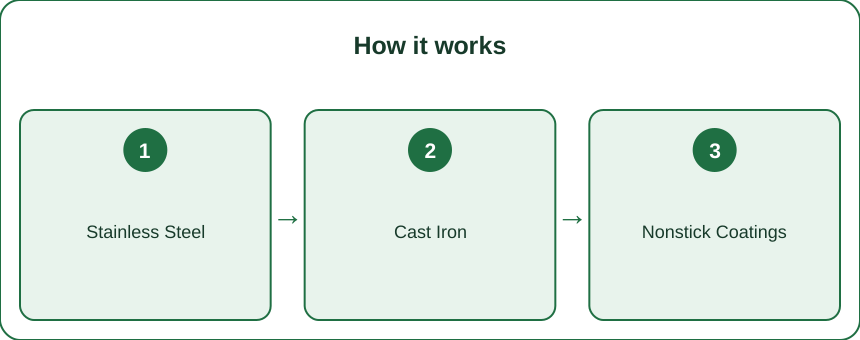
The tradeoffs: stainless steel being broadly considered a safe, stable everyday choice with no meaningful coating to degrade, though it can leach trace amounts of nickel and chromium with acidic foods over very long cook times, generally at levels well below any established concern threshold.
Cast Iron: Durable but Reactive
The tradeoffs: cast iron adding measurable dietary iron, generally a benefit rather than a risk for most people, while reacting poorly with very acidic, long-simmered dishes like tomato sauce, which can pit the seasoning and impart a metallic taste over time.

Nonstick Coatings: What Actually Matters
The tradeoffs: modern PTFE nonstick being considered stable at normal cooking temperatures but genuinely risky once significantly overheated on an empty pan, which is the specific failure mode worth avoiding rather than nonstick cookware as a category.
Ceramic-Coated: The Middle Ground With Its Own Limits
The tradeoffs: ceramic-coated cookware avoiding the PTFE overheating concern specifically, while typically having a shorter nonstick lifespan than PTFE coatings, degrading and losing its nonstick property notably faster with regular use, and the frame (no single cookware material is universally best — stainless steel is the safest default for high-heat and acidic cooking, cast iron adds iron but shouldn’t handle long acidic simmers, and nonstick’s real risk is overheating an empty pan, not the coating itself at normal use.)
Cookware advice tends to swing between blanket fear and blanket reassurance, when the more useful comparison is honest about each material’s actual tradeoffs. Stainless steel is broadly considered a stable, safe everyday default with no coating to degrade, though it can leach trace nickel and chromium with very acidic, long-cooked foods, generally well below any established concern threshold. Cast iron adds dietary iron, a benefit for most people, but reacts poorly with long-simmered acidic dishes like tomato sauce, which can pit the seasoning over time. Modern PTFE nonstick is considered stable at normal cooking temperatures, with the real risk being a significantly overheated empty pan rather than nonstick cookware as a category, while ceramic-coated cookware avoids that specific overheating concern but typically loses its nonstick property faster with regular use than PTFE does.
Keep Reading
This article is for general informational purposes only and is not medical advice. Always consult a qualified health professional for guidance specific to you.