Is a Scratched Nonstick Pan Actually Still Safe to Cook With?
Quick Answer: Light, superficial scratches on a nonstick pan generally don’t pose an immediate safety concern, but visible flaking, peeling coating, or coating that’s noticeably worn through to bare metal in spots is the point where replacement becomes the safer choice rather than continued use.
A scratched nonstick pan isn’t automatically dangerous, but it isn’t automatically fine forever either — the actual coating condition is what matters.

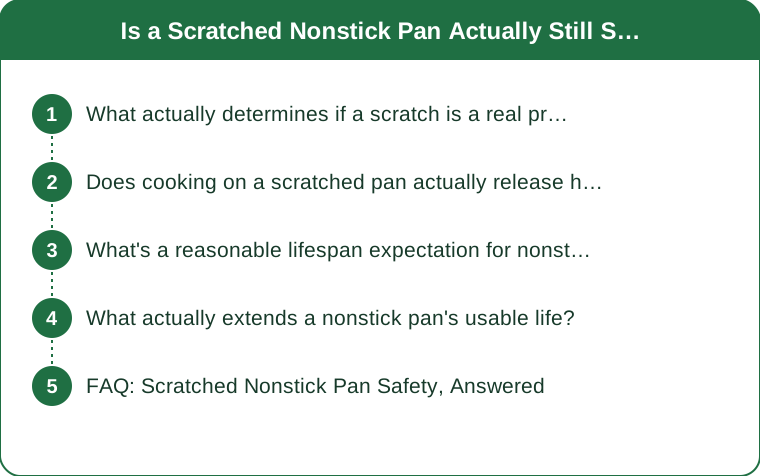
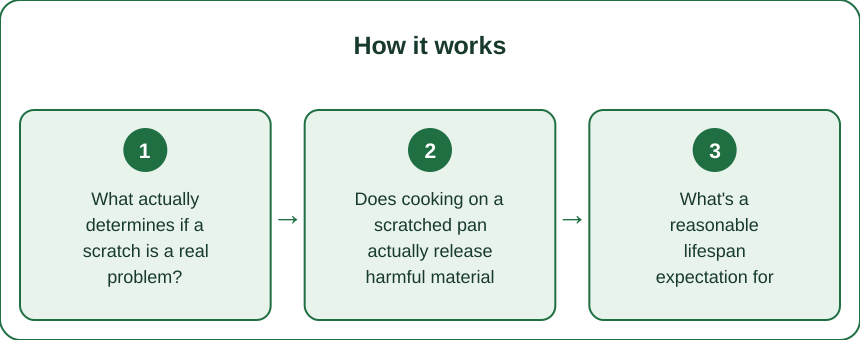
What actually determines if a scratch is a real problem?
Whether the coating is flaking or peeling versus just superficially marked is the key distinction. Surface scuffs from utensils that don’t disturb the coating’s integrity are generally considered low-concern; visible flaking or peeling is where replacement is recommended.
Does cooking on a scratched pan actually release harmful material into food?
With modern nonstick coatings and light surface scratching, the risk is generally considered low, though older coatings or more significant damage change that calculation — coating condition and age both factor into the actual risk level.

What’s a reasonable lifespan expectation for nonstick cookware generally?
Most nonstick pans have a practical lifespan of roughly 3-5 years with regular use, after which coating degradation (regardless of visible scratching) becomes more likely, making periodic replacement a normal part of kitchen maintenance rather than a sign of misuse.
What actually extends a nonstick pan’s usable life?
Using silicone, wood, or nylon utensils instead of metal, avoiding high heat, and hand washing instead of the dishwasher all reduce coating wear meaningfully and extend the pan’s safe usable lifespan.
FAQ: Scratched Nonstick Pan Safety, Answered
Should I switch to a different pan for acidic foods if mine has light scratches?
Using a different pan for consistently acidic dishes is a reasonable precaution once any scratching is present, though not strictly required for light surface marks.
Is ceramic nonstick safer long-term than traditional nonstick coating?
Ceramic coatings have their own separate wear pattern and don’t automatically solve the scratching concern — both types benefit from the same gentle-use practices.
What’s the clearest sign it’s time to just replace the pan?
Visible flaking, peeling, or food noticeably sticking to previously nonstick areas are the clearest signs replacement is the safer choice.
TL;DR:
- Light surface scratches are generally low-concern; flaking or peeling coating is the real threshold
- Modern coatings with minor scratching carry lower risk than older or more damaged coatings
- A 3-5 year practical lifespan is normal regardless of visible scratch level
- Gentle utensils, lower heat, and hand washing meaningfully extend a pan’s safe usable life
Keep Reading
This article is for general informational purposes only and is not medical advice. Always consult a qualified health professional for guidance specific to you.