When to Actually Toss a Nonstick Pan (It's Not When You Think)
Quick Answer: A few light scratches don’t mean toss it — coating breaks down from heat damage and flaking, not cosmetic marks. Retire a nonstick pan the moment you see flaking, peeling, or a warped base, or once it’s more than 3-5 years of regular use old.
You’ve got a pan with a few silverware scratches and you’re staring at it wondering if dinner is now a health decision. It’s not, usually. But there’s a specific line where a nonstick pan actually does need to go in the recycling bin, and it isn’t the one most people think.

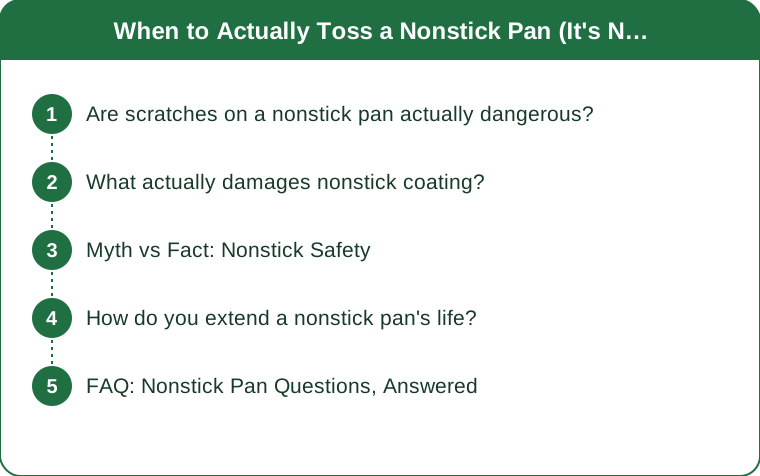
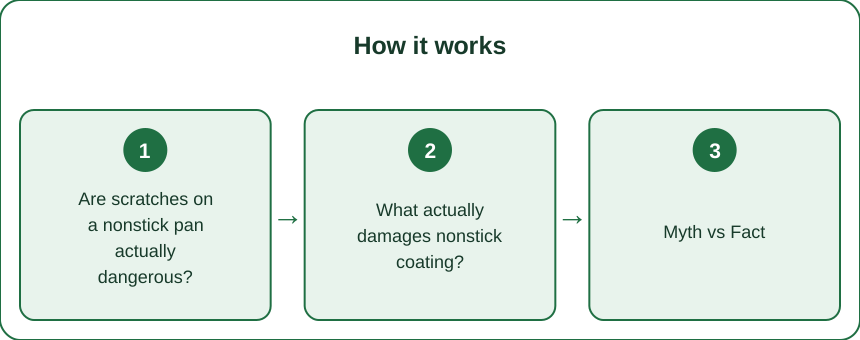
Are scratches on a nonstick pan actually dangerous?
Light cosmetic scratches from a spatula or whisk are mostly a non-issue. The coating is designed with some resilience, and a stray scratch doesn’t instantly release chemicals into your eggs.
What matters is whether the coating is flaking off in visible pieces — that’s the point where you’re plausibly ingesting bits of it, and that’s the real signal to stop using the pan, not the presence of scratches alone.
What actually damages nonstick coating?
Three things do the real damage, in order of impact:
- Overheating (empty pan on high heat, over 500°F) breaks down the coating chemically, sometimes releasing fumes
- Metal utensils used aggressively over years, not one slip
- Dishwasher cycles, which are harsher than most people assume
A pan babied with wood or silicone utensils, medium heat, and hand-washing can last 5+ years. One dragged through a dishwasher on high heat weekly might be done in 18 months.

Myth vs Fact: Nonstick Safety
Myth: Any scratch means the pan is now toxic. Fact: Scratches alone aren’t the danger marker — flaking and warping are.
Myth: All nonstick coatings use the same chemicals as decades ago. Fact: Most cookware sold since 2013 no longer uses PFOA, the specific compound tied to the older health concerns. Check for ‘PFOA-free’ on the label if you’re unsure of your pan’s age.
Myth: A warped pan is just a cosmetic issue. Fact: Warping means the coating has been overheated unevenly, which is exactly the condition that degrades it fastest — treat a wobbly pan as a retirement notice.
How do you extend a nonstick pan’s life?
Keep heat at medium or below — nonstick doesn’t need high heat to work, that’s the whole point of the coating. Never preheat empty. Use wood, silicone, or plastic utensils only. Hand-wash with a soft sponge, and let the pan cool before rinsing with cold water to avoid warping the base.
FAQ: Nonstick Pan Questions, Answered
How often should I replace a nonstick pan?
Every 3-5 years with regular use is a reasonable baseline, sooner if you see flaking or warping, later if you’ve been gentle with heat and utensils.
Is it safe to cook on a slightly scratched pan?
Yes, for light cosmetic scratching with no flaking. Monitor it and retire it once pieces start coming loose.
What’s a safer alternative if I’m worried?
Cast iron or stainless steel have no coating to degrade, though they need different technique. Ceramic-coated pans are another option, with their own shorter typical lifespan of 1-2 years.
TL;DR:
- Scratches alone aren’t the danger sign — flaking and warping are
- Overheating an empty pan does more damage than years of gentle use
- Medium heat, soft utensils, hand-wash: 5+ years of life
- Replace at the first sign of flaking, or every 3-5 years as a default
Check for flaking tonight, not scratches — that’s the only signal that actually matters.
Keep Reading
This article is for general informational purposes only and is not medical advice. Always consult a qualified health professional for guidance specific to you.