Why a Wooden Cutting Board Keeps Smelling No Matter How Often It's Washed
Quick Answer: Wood is a porous material, and odor-causing compounds from foods like onion, garlic, and fish penetrate into the microscopic pores below the surface rather than staying on top, which is why normal surface washing removes the visible mess but not the embedded smell — a baking soda paste scrub followed by a lemon or vinegar rinse, or occasional deeper treatment with coarse salt, reaches into those pores more effectively than dish soap and water alone.
A lingering smell in a wooden cutting board isn’t a sign it’s dirty or unsafe — it’s a sign the odor compounds have penetrated below the surface that regular washing actually reaches.

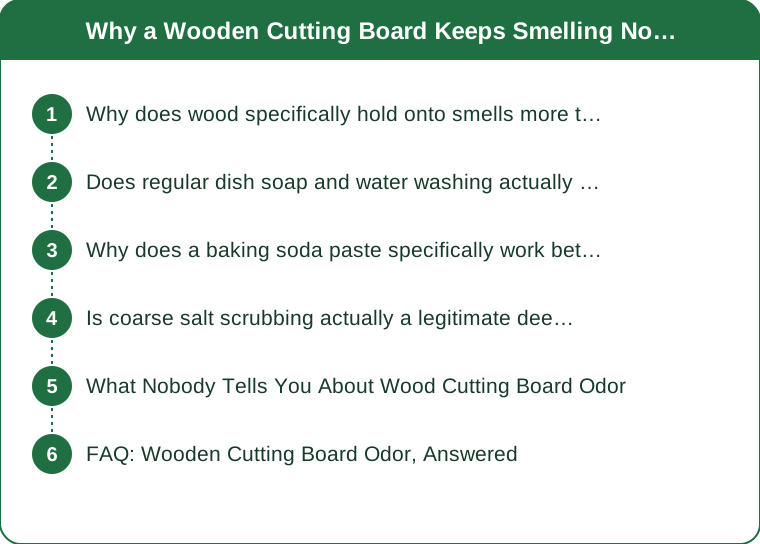
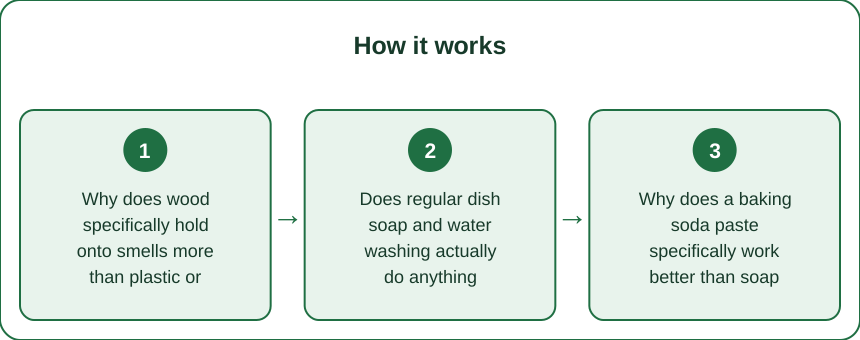
Why does wood specifically hold onto smells more than plastic or other cutting surfaces?
Wood is a naturally porous material with microscopic channels and pores running through its structure, and strong-smelling food compounds — particularly sulfur compounds from onion and garlic, and oils from fish — can penetrate into these pores during cutting, well below the depth that surface washing reaches. Non-porous surfaces like plastic or glass don’t have this same pore structure, which is part of why they don’t develop the same persistent embedded odor over time.
Does regular dish soap and water washing actually do anything useful, even if it doesn’t fully solve the smell?
Yes — regular washing effectively removes surface bacteria, visible residue, and loose food particles, which is important for food safety, even though it doesn’t reach the odor compounds embedded deeper in the wood’s pores. Surface cleaning and odor removal are genuinely two different tasks, which is why a board can be perfectly clean by food-safety standards while still smelling.
Why does a baking soda paste specifically work better than soap for the embedded odor?
Baking soda is mildly abrasive and alkaline, which helps it both physically work slightly into the wood’s surface pores during scrubbing and chemically neutralize some of the acidic, sulfur-based odor compounds responsible for smells like onion and garlic. Combined with a lemon or vinegar rinse afterward, which adds a mild acid to help break down remaining odor compounds, this two-step approach reaches meaningfully deeper than soap and water alone.

Is coarse salt scrubbing actually a legitimate deeper-cleaning method, or just an old kitchen myth?
It’s a legitimate method — coarse salt acts as a more aggressive abrasive than baking soda, and scrubbing it into the board (often with a cut lemon half used as the scrubbing tool) reaches slightly deeper into the wood’s surface pores for boards with a particularly stubborn, ingrained odor. This is generally recommended as an occasional deeper treatment rather than an every-use routine, since it’s more abrasive on the wood surface than daily washing.
What Nobody Tells You About Wood Cutting Board Odor
A cutting board’s odor problem often gets worse over time not because more smell keeps accumulating, but because repeated moisture exposure without full drying between uses allows the embedded compounds to interact with trapped moisture and intensify — ensuring the board fully air-dries standing upright between uses, rather than lying flat or being put away slightly damp, measurably reduces how quickly odor builds up in the first place.
FAQ: Wooden Cutting Board Odor, Answered
Is a lingering smell in a wooden cutting board a food safety concern, separate from just being unpleasant?
Not inherently — a properly washed and dried wooden board (wood has natural antimicrobial properties from its porous structure) can be safe even with a lingering smell, though a board with visible mold, deep cracks, or a genuinely off/sour smell (not just a food-specific smell) should be replaced.
How often should the deeper baking soda or salt treatment actually be done?
Weekly or after preparing particularly strong-smelling ingredients like raw onion, garlic, or fish is a reasonable frequency for most home kitchens, rather than after every single use.
Does oiling a wooden cutting board help with odor, or is that a separate maintenance step?
Regular oiling with food-safe mineral oil is primarily for preventing the wood from drying and cracking, but a well-oiled board’s slightly sealed surface can also reduce how deeply new odor compounds penetrate, making it a helpful secondary benefit alongside its main purpose.
TL;DR:
- Wood’s porous structure lets odor compounds from onion, garlic, and fish penetrate below the reach of surface washing
- Regular soap and water cleans surface bacteria but doesn’t address embedded odor — these are two different tasks
- A baking soda paste followed by a lemon or vinegar rinse reaches noticeably deeper than soap alone
- Full air-drying standing upright between uses slows how quickly new odor builds up in the first place
A lingering smell in a wooden cutting board reflects wood’s genuinely porous structure, not poor washing habits — and a targeted deeper-cleaning step, not just more frequent regular washing, is what actually clears it.
Keep Reading
This article is for general informational purposes only and is not medical advice. Always consult a qualified health professional for guidance specific to you.