Why Silicone Utensils Get Sticky Over Time - and Whether That Means Throwing Them Out
Quick Answer: Silicone is slightly porous and oleophilic - it absorbs oil. Over months, cooking oils penetrate the surface, oxidize, and polymerize into a sticky film that dish soap cannot remove because the oil is no longer sitting on the surface. The fix that works: a baking-soda paste scrub, or baking the utensil at around 350°F for 20-30 minutes on a lined tray to draw the oil out. If the silicone has gone gummy all the way through, or if it smells rancid after cleaning, replace it.
Stickiness itself is not a safety alarm. Degradation - tearing, discoloration, a chemical smell, or bits coming off - is.
And the lower-grade the silicone, the faster all of this happens.

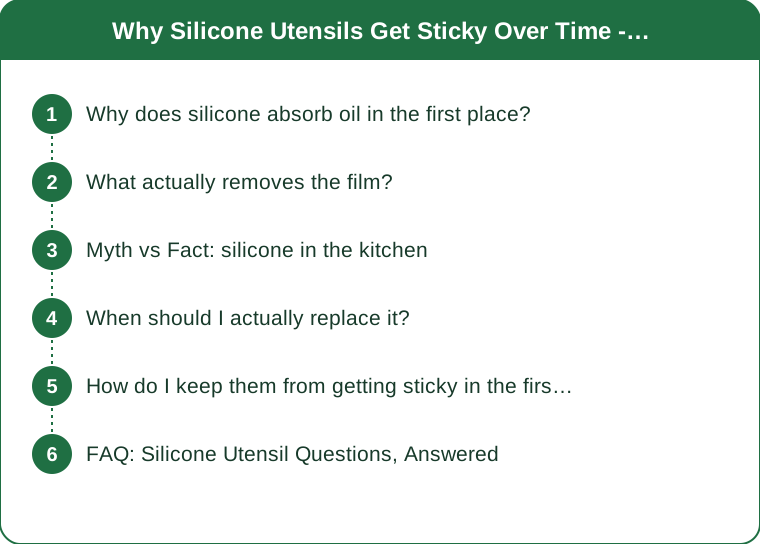
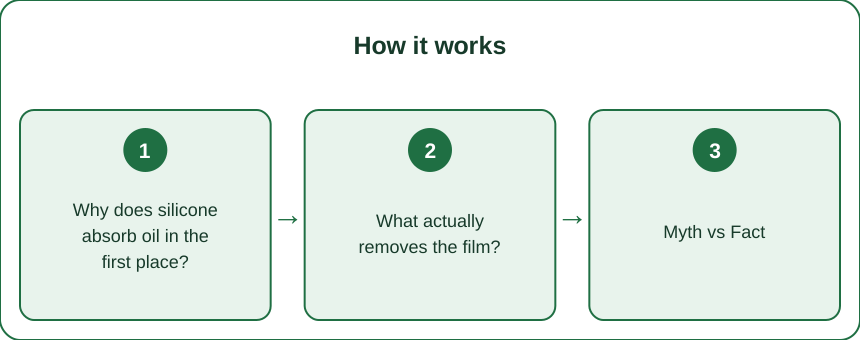
Why does silicone absorb oil in the first place?
It is a property of the material, not a defect.
Silicone is a polymer with a slightly open molecular structure, and it is oleophilic - meaning it has an affinity for oils rather than repelling them. Water beads on it; oil does not.
When you cook with oil, some of it works into the surface. Repeated heating accelerates this, because heat both thins the oil and opens the material slightly.
Then the absorbed oil sits there and oxidizes. Oil exposed to air, heat, and time polymerizes - the same chemistry that seasons a cast iron pan. On cast iron that is desirable. On a spatula it produces a tacky, slightly gummy film that will not rinse.
Why dish soap fails: soap removes oil sitting on a surface. This oil has penetrated below it, and the polymerized portion is no longer in a form that surfactants can lift away.
Why some utensils go sticky fast: filler content. Cheaper silicone often contains non-silicone fillers that make the material more porous and more prone to this.
What actually removes the film?
Three methods, in increasing order of effort.
1. Baking soda paste. Mix baking soda with a little water into a thick paste. Coat the utensil, leave for 15-20 minutes, then scrub with a stiff brush and rinse with very hot water. This handles most mild cases and is the one to try first.
2. The oven method - the most effective. Set the oven to about 350°F. Place the utensil on a paper-towel-lined baking sheet and heat for 20-30 minutes. The heat drives absorbed oil back out of the material and the towel absorbs it. Let it cool, then wash with hot soapy water. Check the utensil’s rated temperature first - most kitchen silicone handles 400-450°F, but not all.
3. Boiling with vinegar. Boil water with a cup of white vinegar and submerge the utensils for 10 minutes. Effective for odor, moderately effective for stickiness.
What does not work: more dish soap, the dishwasher alone (though hot dishwasher cycles do slow the buildup), and abrasive scouring pads, which scratch the surface and make future absorption faster.
Myth vs Fact: silicone in the kitchen
Myth: Sticky silicone is leaching chemicals into your food. Fact: the stickiness is absorbed and oxidized cooking oil, which came from your own kitchen. It is unappetizing, not a contamination event.
Myth: Food-grade and platinum-cured are marketing terms. Fact: they describe real differences. Platinum-cured silicone uses a platinum catalyst and typically contains fewer fillers and byproducts than peroxide-cured. It costs more and it degrades more slowly.
Myth: The pinch test proves quality. Fact: twisting silicone to see if white shows is a widely repeated rough indicator of filler content, not a laboratory result. White can appear in pigmented or lower-grade silicone. Treat it as one weak signal among several.
Myth: Silicone is indestructible. Fact: it degrades with repeated high heat, and utensils used at high temperature deteriorate faster. Most kitchen silicone is rated to roughly 400-450°F - not for use directly on a burner or under a broiler.
Myth: All silicone is dishwasher safe forever. Fact: the dishwasher is fine and helps, but repeated hot cycles gradually break down lower-grade silicone. Check the manufacturer’s guidance.

When should I actually replace it?
Stickiness alone is not the criterion. These are.
Replace it:
- Any tearing, splitting, or nicks. Damaged surfaces harbor bacteria and can shed fragments.
- Pieces coming off, including any bits found in food.
- A persistent chemical or rancid smell after a proper cleaning. Rancid absorbed oil transfers flavor to everything.
- Permanent discoloration with a change in texture - hardening, brittleness, or a gummy feel that survives the oven treatment.
- Warping or loss of shape, which usually means it was overheated.
- Anything with an exposed metal or plastic core showing through.
Keep using it:
- Staining from turmeric or tomato with no texture change. Cosmetic only.
- Mild stickiness that responds to the baking soda or oven method.
- Cloudiness after dishwasher cycles.
A reasonable general expectation for well-cared-for kitchen silicone is several years, shorter for pieces that see high heat regularly. Utensils that touch hot pans daily wear out fastest.
How do I keep them from getting sticky in the first place?
Prevention is easier than removal.
- Wash promptly, in hot water. Oil that sits on the surface overnight has more time to absorb. This is the single most effective habit.
- Do not leave them resting in a hot pan. Heat plus oil plus time is the exact recipe. Use a spoon rest.
- Keep them out of the highest-heat applications. Silicone handles moderate heat well and deep frying poorly.
- Store them dry and separated, not crammed in a jar where they press against each other.
- Do the oven treatment preventively, once or twice a year, before stickiness is obvious.
- Buy fewer, better pieces. Platinum-cured silicone from a brand that states its curing process resists this markedly better, and two good spatulas beat six cheap ones.
And check what you actually need silicone for. It is excellent for heat resistance and non-scratching on coated pans. For dry work and mixing, wood or stainless steel avoids the whole issue - and they are usually the tools you already own.
FAQ: Silicone Utensil Questions, Answered
Is the sticky film dangerous to eat?
It is oxidized cooking oil, not a chemical additive. Not a safety emergency, but it can taste rancid and transfer that flavor to food. Clean it or replace it for taste reasons.
Does color affect anything?
Mostly cosmetics. Darker pieces hide staining better; light ones show it immediately. Pigment quality varies between brands, and cheap dyes on cheap silicone tend to fade unevenly.
Can I put silicone in the dishwasher and be done?
Dishwashers help a lot with routine cleaning and slow the buildup. They do not remove absorbed oil, which is why the oven or baking soda method still has a job once or twice a year.
TL;DR:
- Silicone absorbs oil, which oxidizes into a sticky film that soap cannot lift because it is below the surface.
- The oven method works best: 350°F for 20-30 minutes on a paper-towel-lined tray, then wash hot.
- Baking soda paste handles milder cases; skip abrasive pads, which make it worse long term.
- Stickiness is not a safety issue. Tearing, shedding, rancid smell, or texture change are - replace those.
- Wash promptly, avoid highest heat, and buy platinum-cured to slow the whole process down.
Do the oven treatment on your whole silicone drawer once this season. Twenty-five minutes of oven time and they come out feeling new.
Keep Reading
This article is for general informational purposes only and is not medical advice. Always consult a qualified health professional for guidance specific to you.