The Kitchen Swap People Forget the Moment Soup Season Starts
Quick Answer: Most slow cooker inserts are glazed ceramic or stoneware, which is fine. The overlooked items are the disposable plastic liner bags, plastic lids, and plastic serving utensils used at temperature for six to ten hours. Heat and time are the two conditions that most increase migration from plastics into food, and a slow cooker maximises both. Skip the liner bags, use metal or wood utensils, and check that any older insert has an intact, uncracked glaze.
You did the work. Glass containers, wooden boards, no scratched nonstick.
Then October arrives, the slow cooker comes out, and you drop a plastic liner bag into it and run it at 90°C for nine hours.
That one appliance undoes a surprising amount of the rest.
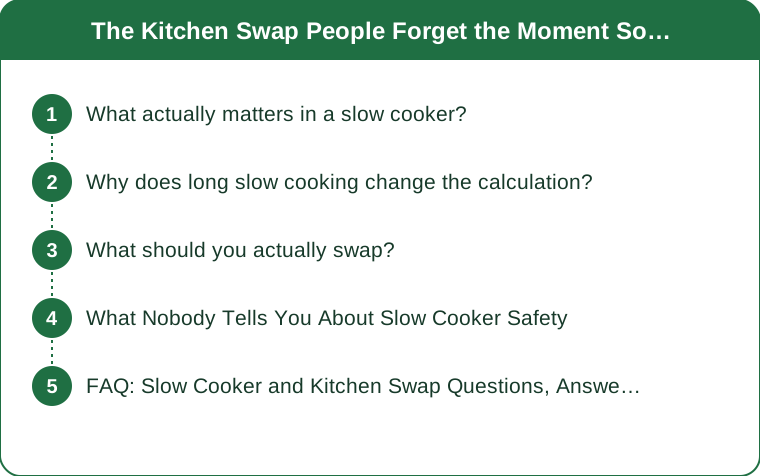
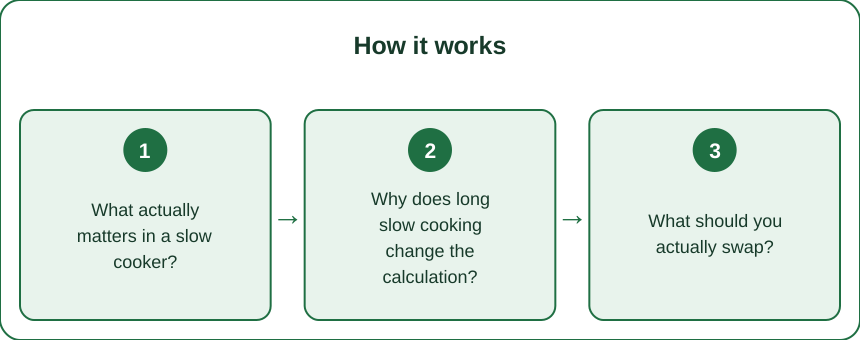
What actually matters in a slow cooker?
Three components, and only one of them is the thing people worry about.
The insert itself is usually fine. Glazed ceramic and stoneware are stable and non-reactive. This is the part people ask about and the part least likely to be an issue.
Disposable liner bags are the overlooked one. These are plastic films held at cooking temperature, in contact with acidic food, for many hours. Heat, time and acidity are the three conditions that most increase migration of substances from plastic into food.
Plastic lids and knobs matter less but not nothing. A lid is exposed to steam rather than immersed, so contact is lower. A lid that has gone cloudy, brittle or crazed is worth replacing regardless.
Plastic serving utensils left in the pot are a real one. A plastic ladle resting in simmering soup for an hour is prolonged hot contact, and softening or discolouration is a sign it is degrading.
Cracked or crazed glaze is the genuine ceramic concern. An intact glaze is a stable barrier. A cracked one exposes the substrate and can harbour bacteria in the fissures. If the interior is visibly crazed, replace it.
Older or imported decorative ceramics are a separate question. Cookware from unknown sources, particularly decorative or antique pieces, may not meet current standards for glaze composition. Use pieces intended and certified as cookware. This is general information, not medical advice.
Why does long slow cooking change the calculation?
Because migration from plastics is driven by exactly the variables a slow cooker maximises.
Temperature is the dominant factor. Migration increases substantially with heat. A container that is entirely fine holding cold leftovers behaves differently at 85 to 95°C.
Contact time multiplies it. Two minutes in a microwave and nine hours in a slow cooker are not comparable exposures even at similar temperatures.
Acidity and fat both increase transfer. Tomato-based stews, chilli and anything with wine sit at the high-transfer end. Fat is also an effective solvent for many of the substances involved.
Surface area matters. A liner bag contacts the entire volume of food, not just the base. It is the maximum possible contact area.
Which is why slow cooking is the specific case worth attention. Most everyday plastic contact is short, cool, or both. Slow cooking is long, hot and often acidic simultaneously — the one common kitchen scenario where all three conditions stack.
The realistic framing: this is about reducing an easily avoidable exposure, not about panic. The liner bag saves washing up. That is the whole benefit, and it is easy to give up.
What should you actually swap?
A short list, most of which costs nothing.
Skip the liner bags. Soak the insert in hot soapy water for twenty minutes instead and it cleans easily. This is the single swap worth making.
If you want easier cleaning, oil the insert lightly first. A thin film of oil on the ceramic before adding ingredients does most of what the liner was doing.
Use metal, wood or silicone utensils, not plastic. Silicone is stable at these temperatures; ordinary plastic utensils soften and degrade.
Do not store food in the insert in the fridge if it is chipped. And in general, decant into glass for storage — it cools faster and stores better, which is a food safety win as well.
Check the glaze once a year. Run a finger over the interior. Crazing feels like fine cracks and looks like a spiderweb pattern. That is a replacement signal.
Replace a cloudy or brittle plastic lid. Many manufacturers sell replacements, and glass lids are available for common models.
Do not use the insert on a stovetop unless it is rated for it. Thermal shock cracks ceramic, and a cracked insert is the actual problem you are trying to avoid.
Seasonal note: this is also the season for reusable silicone bags, air fryer liners and parchment shortcuts, all of which have their own temperature limits. Anything used at high heat has a rated maximum temperature — worth checking once now rather than assuming, particularly for parchment and silicone in an air fryer.
What Nobody Tells You About Slow Cooker Safety
Food safety matters more than material safety here. The most consequential slow cooker mistakes are food temperature ones — filling below half or above three-quarters, or adding frozen meat, both of which slow the passage through the temperature danger zone.
Fill between half and three-quarters full. Under-filling overheats and over-filling means the contents take too long to reach a safe temperature.
Do not lift the lid to check. Each lift can cost 20 to 30 minutes of cooking time, which extends the time spent in the danger zone.
Thaw before adding, do not cook from frozen. Frozen ingredients keep the whole pot in the danger zone far longer than intended.
Cool leftovers fast, in shallow containers. A full ceramic insert of hot stew put straight into the fridge takes hours to cool and warms everything around it.
Older models run hotter than newer ones. Manufacturers adjusted temperatures upward over the years for food safety reasons, so a decades-old cooker may run cooler than modern guidance assumes. Checking that food reaches proper temperature is worthwhile with vintage units.
The dishwasher is usually fine for the insert. Check your manual, but most modern ceramic inserts are dishwasher safe, which removes the last argument for liner bags.
FAQ: Slow Cooker and Kitchen Swap Questions, Answered
Are slow cooker liner bags dangerous?
They are sold as food-safe for the purpose. The reasonable position is that heat, time and acidity all increase migration, and skipping them removes an avoidable exposure for very little inconvenience.
Is a ceramic insert safe?
An intact, undamaged glaze on cookware intended for the purpose is a stable, non-reactive surface. Replace it if the glaze is crazed or chipped.
What about stainless steel inserts?
Stainless is stable and a good option. Some models offer it, and it also allows stovetop searing in the same vessel.
Can I use silicone utensils?
Yes — silicone is stable at slow cooker temperatures. Check the rated maximum for anything used in an air fryer or oven.
How do I clean the insert without a liner?
Soak in hot soapy water for twenty minutes, or run it through the dishwasher if your manual permits. A light oiling before cooking prevents most sticking.
Should I replace an old slow cooker?
If the glaze is intact and it holds temperature, no. If the interior is crazed, chipped or the lid is brittle, yes.
TL;DR:
- The insert is usually fine — the overlooked items are liner bags, plastic lids and plastic utensils at temperature.
- Slow cooking stacks all three migration drivers: high heat, many hours, often acidic food.
- Skip the liner bags; soak the insert or oil it lightly before cooking instead.
- Check the glaze annually for crazing or chips — that is the real ceramic concern.
- Food safety matters more: fill half to three-quarters, thaw first, keep the lid on.
One swap, no cost, takes twenty minutes of soaking a week.
Keep Reading
This article is for general informational purposes only and is not medical advice. Always consult a qualified health professional for guidance specific to you.