Why Your Wooden Spoon Smells No Matter How Often You Wash It (and the Actual Fix)
Quick Answer: Wooden utensils absorb odor compounds into their porous surface over repeated use, especially from oils, garlic, and onion, which regular dish soap and water can’t fully remove because the smell is embedded below the surface, not just sitting on top. A baking soda paste soak or occasional oil-and-salt scrub removes embedded odor more effectively than washing alone.
A smelly wooden spoon isn’t a sign you’re washing it wrong — wood is porous, and odor compounds work their way below the surface where regular washing physically can’t reach.

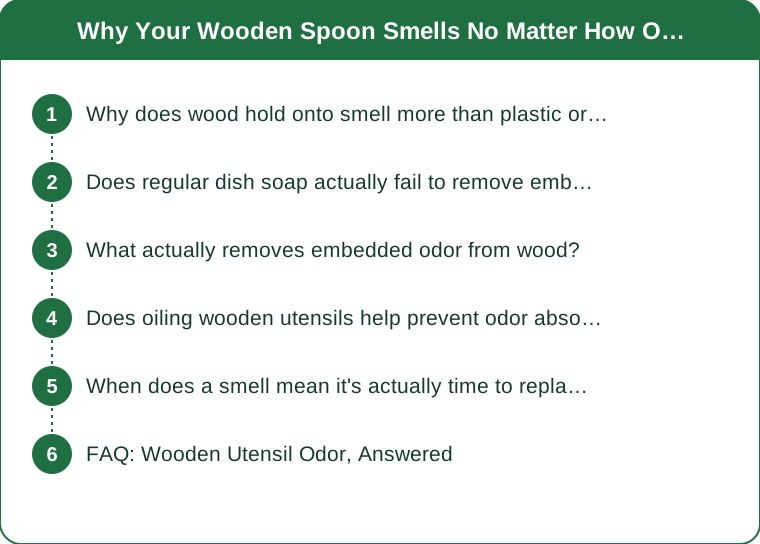
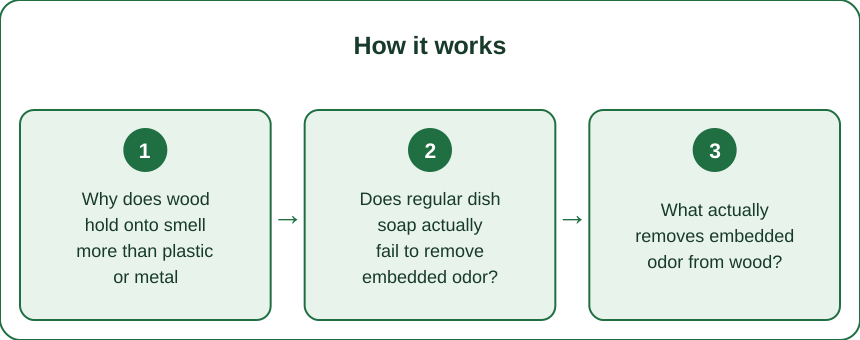
Why does wood hold onto smell more than plastic or metal utensils?
Wood has a porous, fibrous structure that absorbs liquid and oil-soluble odor compounds into the material itself, not just onto the surface — this is different from non-porous materials like metal or sealed plastic, where odor sits on top and rinses away completely. This same porosity is part of why wood is prized for other kitchen uses, but it’s the direct cause of lingering smell.
Does regular dish soap actually fail to remove embedded odor?
Largely, yes — standard dishwashing removes surface residue and bacteria effectively, but odor compounds absorbed into the wood’s pores are physically below where soap and a sponge reach, which is why a spoon can look and feel clean while still carrying a garlic or fish smell from days earlier.
What actually removes embedded odor from wood?
A baking soda paste (baking soda mixed with a small amount of water) rubbed into the wood and left for 10-15 minutes before rinsing is the most commonly recommended fix — baking soda’s mild abrasive and odor-neutralizing properties reach slightly below the immediate surface better than soap alone. A coarse salt and lemon scrub is a commonly cited alternative with a similar mechanism.

Does oiling wooden utensils help prevent odor absorption in the first place?
Yes — regularly oiling wood utensils (food-safe mineral oil or a specific wood conditioning oil) helps seal the pores somewhat, reducing how much liquid and odor compound the wood absorbs during use. This is a preventive step rather than a cure for existing odor, and it also helps prevent the wood from drying and cracking.
When does a smell mean it’s actually time to replace the utensil?
If a strong odor persists after a baking soda treatment and the wood shows visible deep cracking, splitting, or a slick residue that doesn’t scrub away, replacement is more appropriate than continued treatment — deep cracks can also harbor bacteria in a way that surface odor treatments don’t address.
FAQ: Wooden Utensil Odor, Answered
Is it safe to put wooden utensils in the dishwasher to deal with odor?
Most wood care guidance recommends against it — dishwasher heat and prolonged water exposure accelerates cracking and warping, making the odor-absorption problem worse over time, not better.
How often should wooden utensils be oiled?
Roughly once a month with regular use is a commonly cited guideline, though drier climates or more frequent washing may call for more often.
Does the type of wood affect how much odor it absorbs?
Denser hardwoods (like olive wood or maple) tend to be somewhat less porous and absorb odor more slowly than softer woods, though all wood is porous to some degree.
TL;DR:
- Wood’s porous structure absorbs odor compounds below the surface, not just on top
- Regular dish soap cleans the surface but can’t reach embedded odor
- A baking soda paste soak removes embedded smell more effectively than washing alone
- Regular oiling helps prevent future odor absorption by partially sealing the wood’s pores
The smell isn’t a cleaning failure — it’s just wood doing what porous wood does. Treat it differently than a plastic utensil and it resolves.
Keep Reading
This article is for general informational purposes only and is not medical advice. Always consult a qualified health professional for guidance specific to you.